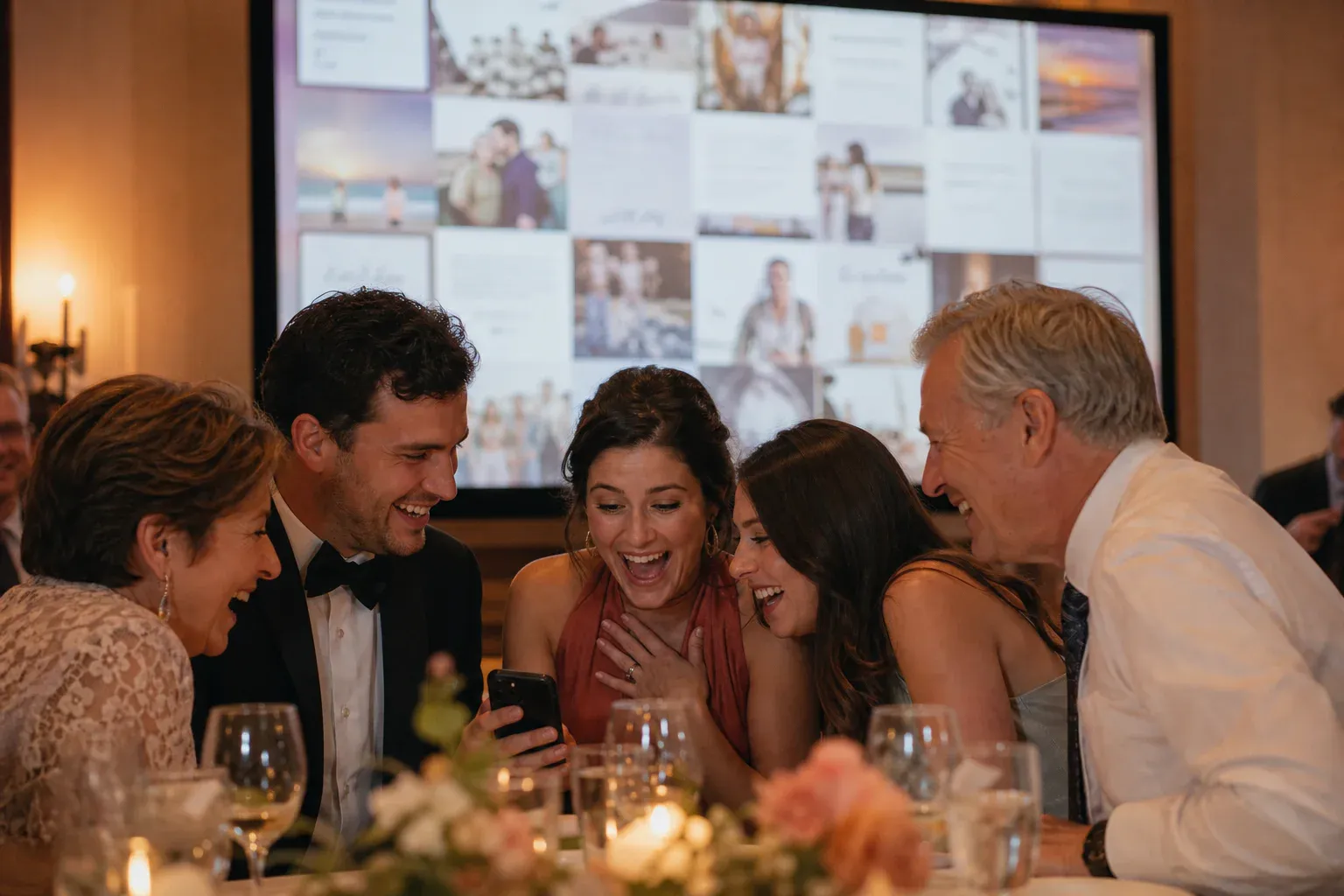
A wedding message wall works best when it feels less like a digital form and more like an invitation. The technology can be almost invisible: a small code at the table, a clear prompt, and a screen that gradually fills with the words and photographs of the people in the room.
The details around that experience matter. Guests need to understand what to share, where to share it, and why it is worth looking up from the conversation for a moment. These ideas focus on those practical decisions.
1. Ask for a memory, not “a message”
Blank prompts create blank minds. Give guests a specific starting point such as “Tell us the moment you knew they belonged together” or “What should we remember about tonight in twenty years?” A focused question produces warmer, more distinctive answers than an open text box alone.
You can change the prompt during the reception. Begin with advice while guests arrive, switch to favorite moments after dinner, and invite photographs once the dance floor opens.
2. Put the join code where people pause
The best place for a QR code is not always the most visible place in the room. It is the place where guests have enough time to use it. Table cards, menus, the order of service, and the bar queue can work better than a single sign near the entrance.
Keep the instruction short: “Scan to add a message to our wall.” Include the written web address and event code as a fallback for guests who prefer not to scan.
3. Match the screen to the stationery
The wall should look connected to the celebration. Use the same warm white, ink color, and accent tone as the invitations or table plan. If the stationery uses a characterful serif typeface, carry that feeling into the display without sacrificing readability at a distance.
Avoid copying every decorative detail. A venue screen needs larger type, stronger contrast, and quieter movement than a printed place card.
4. Create a family photograph prompt
Ask each table or branch of the family to share one older photograph. The live wall can then move between messages from the reception and small pieces of family history. This is especially effective during the quieter part of dinner, when people can tell one another the story behind each image.
If photographs will be shown publicly, use approval mode so the host can check orientation, quality, and suitability before publishing.
5. Let absent guests contribute
Share the wall link with friends or relatives who cannot be in the room. Their messages can arrive during the reception and appear alongside the guests who are present. Give remote contributors a time window so their posts land while someone is watching the display.
This also works for international families: ask people to post in the language they naturally use rather than making every message sound the same.
6. Use it as a speech companion
Before the speeches, invite guests to submit one word that describes the couple. Reveal the answers on the wall as the room settles. Later, ask for the funniest piece of marriage advice or a prediction for the first anniversary.
The wall should support the speeches, not compete with them. Pause incoming reveals while someone is speaking, then bring the display back when the attention naturally returns to the room.
7. Give the wedding party a head start
An empty wall can make the first guest hesitate. Ask the wedding party and close family to post two or three thoughtful messages before the reception begins. Those examples establish the tone and show everyone else what a good contribution looks like.
Do not fill the entire display in advance. The visible change from a few posts to a room full of voices is part of the experience.
8. Keep motion quiet during dinner
Movement helps new messages feel alive, but it should not pull attention away from conversation. Choose slow reveals, restrained background details, and generous time for reading. Save the more playful display mode for the party later in the evening.
A useful test is to stand at the back of the venue. You should be able to read a message comfortably without feeling that the screen is calling for your attention every second.
9. Replay the wall the morning after
The reception display is only one life for the messages. Revisit the wall over breakfast, during the gift opening, or on the first quiet evening after the wedding. The order in which posts arrived can bring back the rhythm of the day in a way a static gallery cannot.
The strongest wedding message walls are simple to join, specific in what they ask for, and visually at home in the room. Once those three things are right, the guests provide everything that makes the wall worth keeping.